Hackney’s diverse African and Caribbean communities played a significant role in the flourishing of multicultural arts and culture in the borough from the 1960s, when the area’s cheap housing attracted both early career artists and recent migrants. In the 1960s and 1970s people from Antigua and Jamaica settled in Stoke Newington, and St Lucians and Dominicans around Clapton. Hackney was also a main settlement for refugees from Montserrat, displaced by a volcano eruption in 1995, which left much of the island uninhabitable. Hackney’s African communities were traditionally rooted in West Africa – Nigeria and Ghana in particular.
These communities settling in Hackney felt the reverberations of the political, economic and social changes taking place across Britain and in their local area. Many were involved in local grass roots and community organisations, and businesses, to help provide new means of cultural expression, often mixing different styles together. This created a unique environment of creativity and inspiration, and in this blog, we share some examples of Black British creativity flourishing in the borough between the 1960s and 1990s.
Introduction
The First and Second World Wars (1914-1918 and 1939-1945) led to the growth in the number of African and Caribbean people in London with the arrival of seamen, wartime workers and servicemen. They were later joined by students from Africa and large-scale migration from the Caribbean islands formerly under British rule to fill labour shortages. Many of the pioneering artists from African and Caribbean countries made their way to Britain from the mid-20th century to begin or continue their careers as artists.
The artists didn’t necessarily refer to themselves or their practice as ‘Black’. Many saw themselves as part of a cosmopolitan British art scene. However, the art and cultural scene often labelled them as ‘Black’. These artists created influential networks and spaces to further their artistic practice, like the Caribbean Artists Movement and the BLK Art Group. These artists were part of a wider cultural change in Britain which also introduced carnival and a range of new music to the country, and in Hackney.
1960 and 1970s – The Caribbean Artists Movement
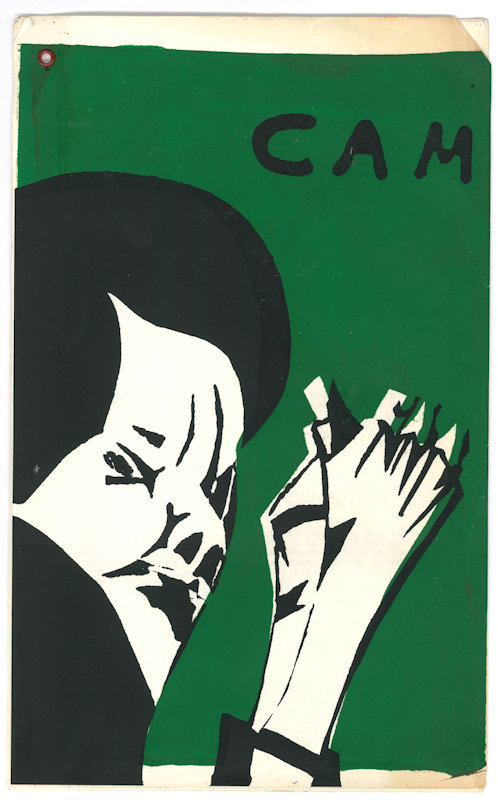
The Caribbean Artists Movement (CAM) (1966-1972) was a forum in which artists could meet up to discuss their work and interests. It was founded because many African-Caribbean writers and artists resident in the United Kingdom felt marginalised and this group enabled cultural activity to thrive among Britain’s Caribbean communities. The structure was informal and open to anyone interested in understanding and sharing the needs and aspirations of Caribbean artists.
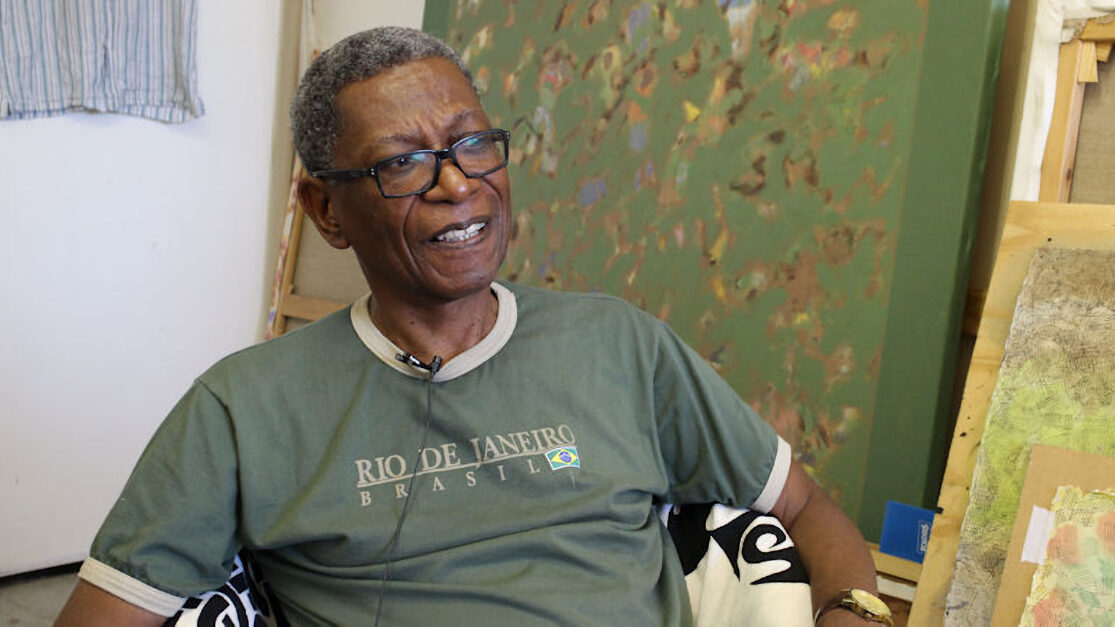
“So I was in awe of them [the other artists] but I was also exhilarated by the fact that I was working alongside, meeting with people who were so able and who were Black like myself.”
Paul Dash, Hackney Museum 2026.53
Paul Dash was a member of the CAM while he was a teacher at Haggerston Girls School in Hackney between 1969 and 1985. His membership of CAM and teaching in Haggerston at the same time influenced his thinking and approach to art. At the school he witnessed the impact of pupils arriving from South Asia and the Caribbean on the local White communities. Paul was a leading figure advocating for different cultural groups to be celebrated within the school curriculum, informed by his own experiences of being taught at school in Oxford in the 1950s, and developed ways of engaging with his students through art.
Listen to Paul Dash sharing his experiences of working in Hackney as a teacher in the 1970s.
1980s – BLK Art Group and Female Artists in Hackney
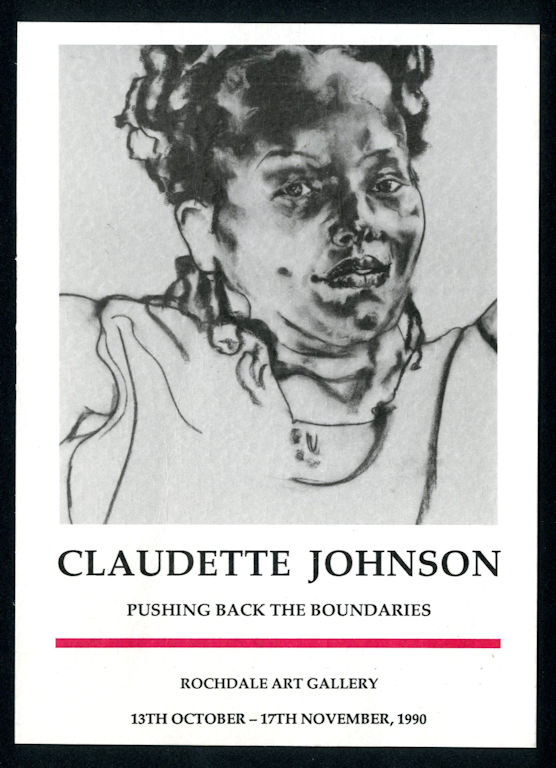
The BLK Art Group (1979-1984) was an association of young African-heritage artists who raised questions about what ‘Black Art’ was, its identity and what it could become in the future. Many of the artists associated with the BLK Art Group went on to participate in the wider Black British arts movement, and some of them were very active in Hackney, including Claudette Johnson. This was a time when the community arts movement was supported by the now defunct Greater London Council (GLC) and many artists were developing both their solo practice and attempting to work with local communities.
Claudette is known for her large-scale drawings of African-heritage women. Like all of the members of the BLK Art Group, she was a child of Caribbean migrants, raised in the industrial landscape in and around the West Midlands. The members were inspired by the Caribbean Artist Movement and US Black Arts Movement and they also worked with other artists across the country, including Ingrid Pollard.
During the 1970s and 1980 Guyanese-born British artist and photographer Ingrid Pollard became interested in liberation movements around race, gender and sexuality. Ingrid was active with a range of local organisations including the Dalston Children’s Centre for whom she illustrated a colouring booklet that explored the experiences of children growing up with lesbian parents. Along with fellow artist Claudette Johnson she was a member of the Lenthall Road Workshop, which provided affordable access to screen printing and photographic equipment so local people, women in particular, could create images to challenge dominant media stereotypes at the time. In 1988, Ingrid was also one of twenty founding members of the Association of Black Photographers (Autograph ABP).
Autograph ABP and Institute of International Visual Arts (Invia) were founded because of a widespread critique about institutional racism in British art. Inivia was founded in 1994 and based in Shoreditch until it moved to Pimlico in 2018. Autograph moved to Shoreditch in 2007 and still remains here.
“I was working at Dalston Children’s Centre…then two months later a job at Lenthall Road came up. So I applied for that…I knew more about photography and there was an opportunity to do photography workshops and to use the facilities and I’d done screen printing courses.”
Ingrid Pollard, Hackney Museum
Listen to Ingrid Pollard and other artists discuss their experiences of community arts in Hackney in the 1970s and 1980s.
1980s – Music and Art
Many other artists lived across the borough, practiced here or were inspired by the cultural creativity created by the diversity of communities, including Denzil Forrester. He arrived in London from Grenada in 1967, aged 11 and lived in Stoke Newington. He later took a foundation course at Central School of Art and Design and lived in a squat on Clissold Road in Stoke Newington. The thriving local music and dance scene were his main sources of inspiration and he had access to many nightclubs in the borough, including Phebes, All Nations and Four Aces.
Listen to Denzil Forrester describe his influences and inspiration.
Another artist inspired by place and music was photographer Dennis Morris. Arriving in London from Jamaica as a young boy, he discovered photography while living on Cecilia Road in Dalston during the 1960s and 1970s. Like many of his generation, reggae music and Bob Marley played a huge role in his life. He left home at 14 to tour with Bob Marley and the Wailers, and his photos became world famous. Discover Dennis Morris’ Hackney roots in this short film.
1990s – Collaborative Art
Alongside makers of different forms of art, there were also many people who engaged with these arts. Both groups championed art forms locally by taking part in events and activities as well as being avid supporters. The community arts movement in Hackney flourished during the 1980s and 1990s. It was made up of a loose grouping of artists who had a strong belief that making art collaboratively, with and for communities, was an important way to recognise and accept diverse cultures in the area. Many received funding to carry out projects and others were able to secure spaces to display exhibitions showcasing important themes about identity.
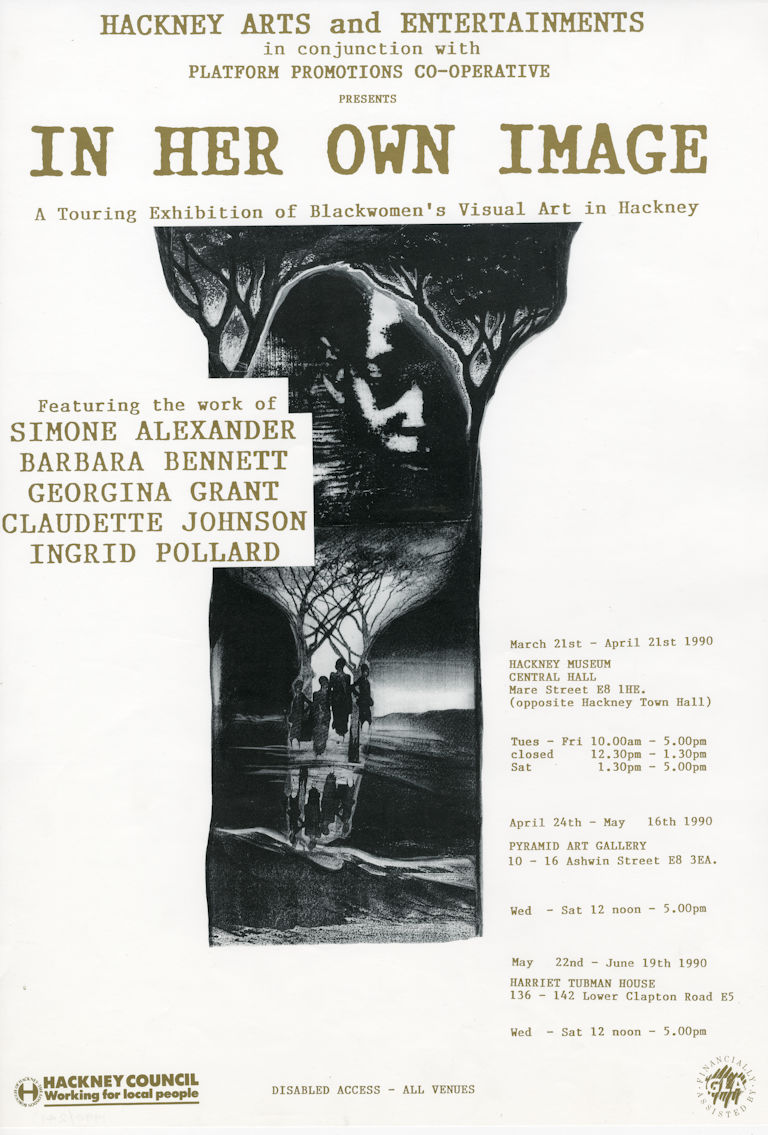
The Pyramid Art Gallery on Ashwin Street, Dalston was one of many gallery spaces in Hackney to host temporary shows and provide a platform for African and Caribbean artists. In 1990 it hosted In Her Own Image, a touring exhibition of African heritage women’s visual art in Hackney. This featured the work of Claudette Johnson and Ingrid Pollard, as well as other London-based artists Simone Alexander, Barbara Bennet and Georgina Grant.
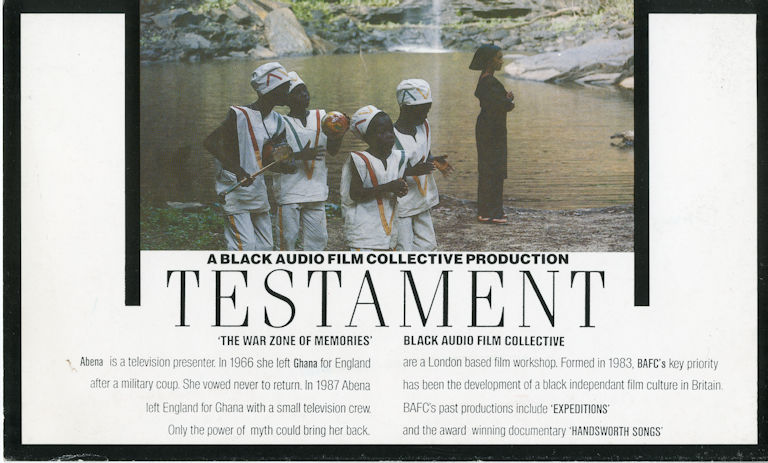
The Black Audio Film Collective (BAFC, 1982-1998) formed in Hackney where many of its members were from, with roots in Ghana, Nigeria, Togo, Trinidad, Jamaica and Dominica. Collectives and cooperatives were popular forms of organising in Hackney to challenge established ways of community organising and running businesses. These organisations were owned and run by their members democratically or through consensus and allowed them the freedom to explore creative or radical approaches to issues such as race, gender or sexuality.
Despite Hackney being multi-ethnic, this was not always reflected in local cultural activities. Many well-meaning arts, cultural and creative organisations active in the borough were seen as unrepresentative of the ethnic diversity of the area, and considered unable to speak about the issues these communities wanted to highlight. The BAFC wanted to change this. Over 16 years, the collective produced some of the most challenging and experimental documentaries in Britain, exploring themes like diaspora, memory and political struggle.
Listen to BAFC founding member John Akomfrah discuss what they wanted to acheive.
Legacy
These artists and many more not mentioned here have left a lasting legacy in the borough and on the local, national and international art scene. They challenged what ‘Black’ art meant and contributed to a wider debate about the role of artists in multicultural and diverse communities, and how to create positive change through different forms of art.
Most of the content for this blog featured in the exhibition ‘People Power: Black British Arts & Activism in Hackney 1960s-2000s‘ at Hackney Museum 4 October 2016 – 21 January 2017.